
Surfing Fitness After 70: Training, Recovery & Longevity Lessons from Joseph Grassadonia
Updated October 10, 2026
Meet Joseph Grassadonia: Redefining Aging Through Fitness and the Ocean
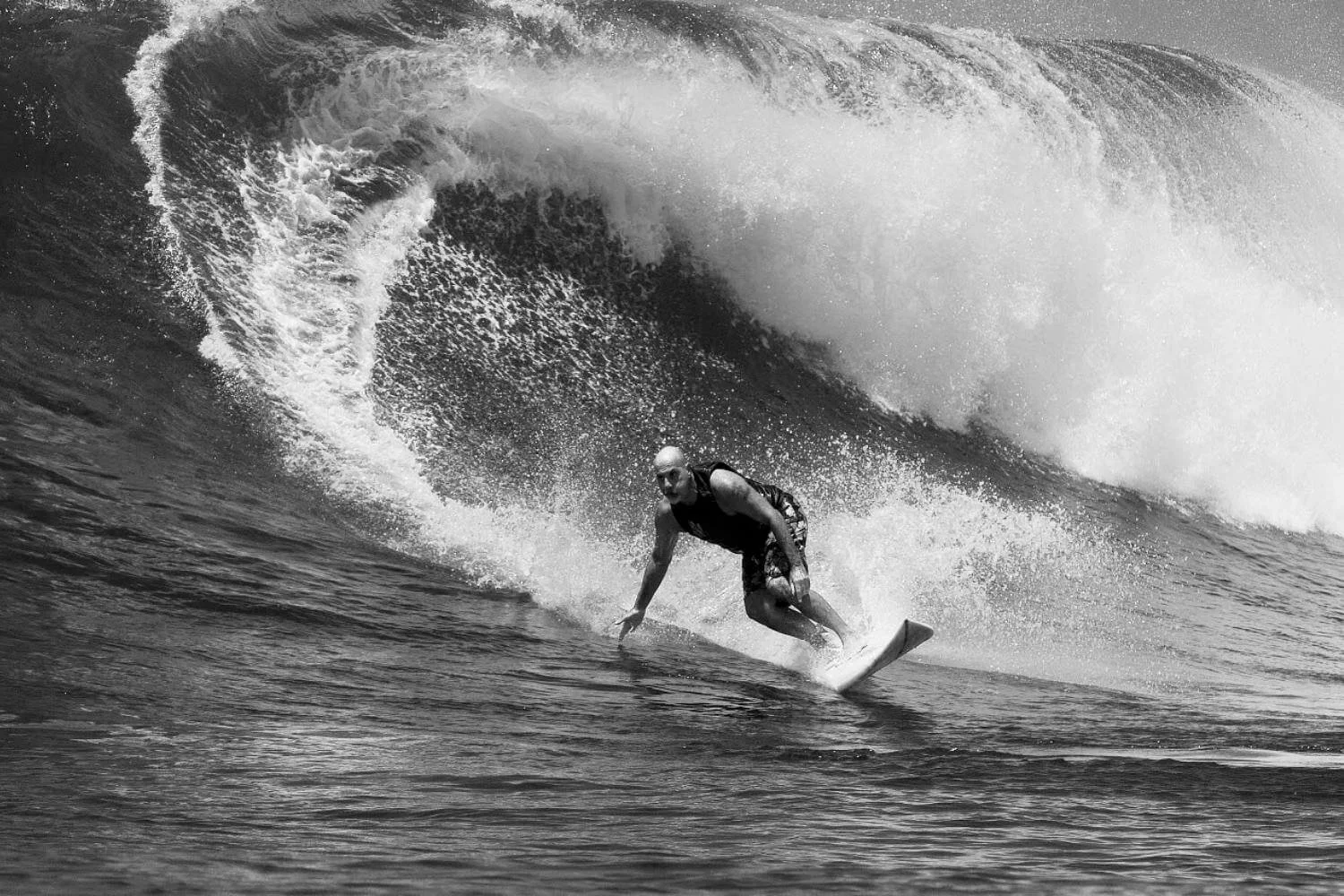
At 74, Joseph Grassadonia is still paddling into the powerful surf of Oahu’s North Shore.
When OnFitness first spoke with him for this story at age 70, he had already spent six decades in the water—and had learned that staying fit with age isn’t about training harder. It’s about knowing when to push, when to recover, and how to adapt.
A lifelong surfer, fitness advocate, and publishing pioneer, Grassadonia continues to surf with purpose and consistency. As the longtime editor of OnFitness Magazine, he has spent decades exploring what it means to age well—not by refusing to slow down, but by refining how we train, recover, and live.
His experience offers practical lessons for older surfers and active adults who want to remain strong, mobile, and engaged for the long term.
From Italian Shores to California Swells
Joseph’s connection to the ocean runs deep.
Growing up in the Italian beach town of Lerici, he caught his first wave at age 10 and was instantly hooked. When his family later moved to Santa Cruz, California, surfing quickly became a cornerstone of his identity.
While studying at the University of California, Santa Cruz, Joseph built his academic and work schedule around the tides—a habit that would ultimately shape both his lifestyle and career.
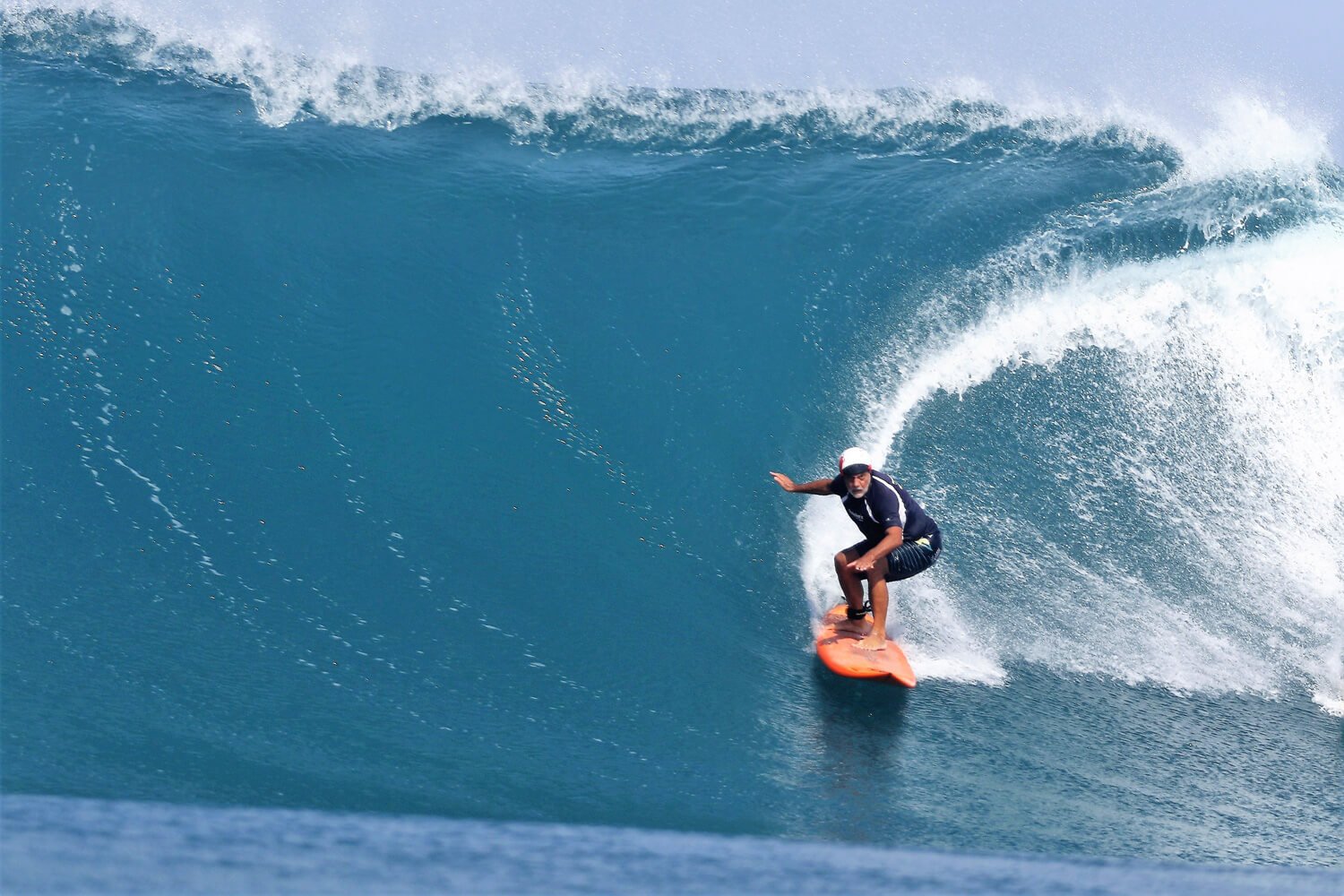
Joseph Grassadonia surfing on Oahu’s North Shore, where decades of experience meet the physical demands of powerful surf.
A Career Built on Passion and Print
During his senior year at UCSC, Joseph co-founded an art magazine with friends, opening an office the very day he graduated.
That publication would be the first of many. Over the years, he launched 12 magazines and a weekly newspaper, establishing himself as a creative force in independent media.
Even as his businesses grew, surfing remained nonnegotiable.
“I knew I wasn’t destined to be a 9-to-5 guy because when the sun was up, I wanted to go surfing,” he said. “I’d bring my surfboards into my office or leave them in my car, get to work early, and take two hours to go surfing at lunchtime. Of course, I could get away with that since I owned the company!”
Surfing wasn’t simply recreation. It became part of the rhythm around which he organized much of his life.
The Wear — and Wisdom — of Time
After more than 60 years in the water, Joseph understands both what surfing gives the body and what decades of physical activity can eventually take from it.
“When you’re young and doing aggressive stuff, you think you’re getting away with it, but you’re not. These injuries come charging out at you in your 50s.”
That realization prompted him to rethink how he trained, ate, and recovered.
Rather than backing away from activity, he adapted.
Maintaining fitness became less about pushing through discomfort or chasing maximum intensity and more about preserving the strength, mobility, balance, and resilience required to continue doing what he loves.
It reflects one of the most important principles of lifelong fitness: the body changes, and successful training changes with it.
Strength Training and Surfing After 70
For Joseph, strength training is ultimately about maintaining the physical capacity to keep surfing.
Paddling, popping up onto a board, stabilizing through a turn, and responding to a constantly changing wave all place demands on muscular strength, balance, mobility, coordination, and endurance.
His training today therefore prioritizes strength, balance, and joint health, rather than volume or intensity for its own sake.
Weight training remains an important part of his routine, helping support the strength and stability required both in the water and in everyday life.
Just as importantly, Joseph no longer views every workout as an opportunity to push harder.
His approach reflects a valuable principle for active aging: consistency matters more than perfection.
Rather than chasing an ideal program, he focuses on training regularly in ways that support surfing without compromising his ability to recover from it.
For older athletes, that distinction matters. A productive workout is not necessarily the hardest one—it is the one that allows you to keep training, moving, and participating in the activities that matter to you.
Nutrition, Intermittent Fasting, and Aging Well
For more than a decade, Joseph has practiced intermittent fasting as part of his personal approach to nutrition and weight management.
He believes the routine has helped him maintain his weight, energy, and mental clarity as he has moved through his seventies.
Intermittent fasting, however, is not necessarily appropriate for every older adult or athlete.
Maintaining adequate total calories and protein becomes particularly important with age because of the need to preserve muscle mass, strength, recovery capacity, and overall health.
Joseph’s experience with fasting should therefore be understood as an individual strategy rather than a universal prescription.
The broader lesson is more useful: as the body changes, nutrition may need to change with it.
Still Surfing at 74
Today, at 74, Joseph continues to surf on Oahu’s North Shore, where locals at Sunset Beach know him as “Kepa.”
Rather than trying to maintain the same frequency or intensity he did when he was younger, he pays closer attention to how his body responds and adjusts accordingly.
That may mean allowing more time for recovery, modifying training, choosing conditions more carefully, or simply recognizing when the body needs rest.
For Joseph, adapting does not mean giving up.
It is what allows him to keep going.
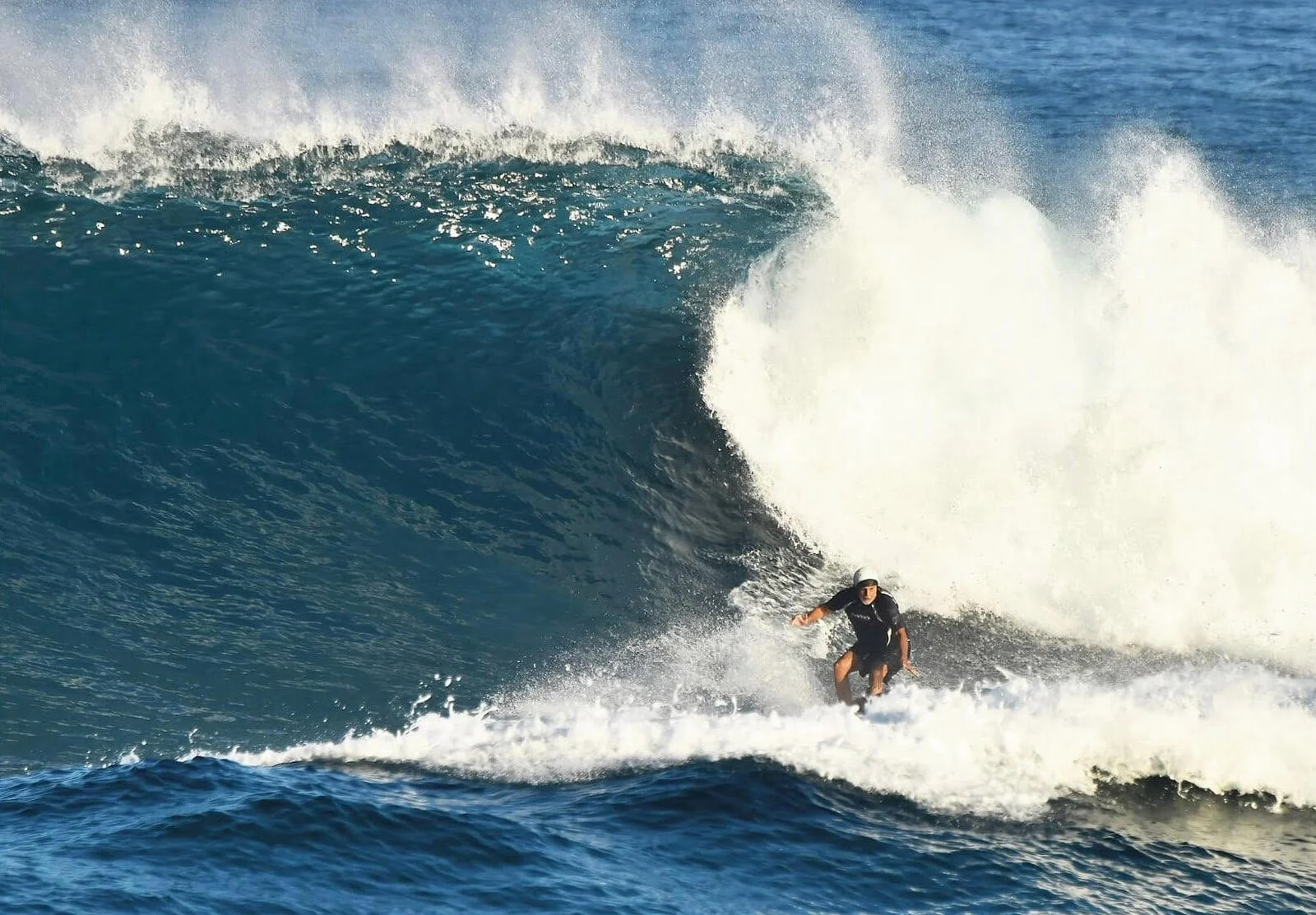
Joseph Grassadonia, now 74, surfing on Oahu’s North Shore—more than six decades after catching his first wave.
Recovery, Pain Management, and an Evolving Approach
Recovery has become increasingly important to Joseph’s fitness strategy as he has aged.
When OnFitness originally interviewed him at age 70, Joseph discussed CBD hemp oil as one element of his personal approach to managing discomfort and recovery.
“What I like about CBD is that I can get the benefits of marijuana without the high. At my age, I want to have as much clarity as possible.”
CBD was one part of a much broader approach that included regular exercise, attention to nutrition, and managing the accumulated aches and injuries that can accompany decades of surfing.
Joseph also spoke at the time about the importance of reducing discomfort so that he could remain active.
“If you have pain, you’re not having a quality of life,”
Scientific evidence regarding CBD for exercise recovery and musculoskeletal discomfort remains mixed and continues to evolve. Individual responses can also vary.
Joseph’s comments should therefore be understood as his personal experience rather than a recommendation or established treatment.
More broadly, his experience underscores an increasingly important principle of fitness with age: recovery deserves the same attention as training.
Sleep, appropriate training volume, mobility work, nutrition, and adequate rest all play a role in maintaining the ability to stay active over the long term.
Sleep, appropriate training volume, mobility work, nutrition, and adequate rest all play a role in maintaining the ability to stay active over the long term. Our guide to workout recovery tips offers additional strategies for improving recovery between sessions.
What Older Athletes Can Learn from Joseph Grassadonia
Joseph’s story is not about trying to train like a 25-year-old indefinitely.
It is about preserving the physical capacity to continue doing something meaningful as the decades pass.
Through strength training, thoughtful recovery, attention to nutrition, and a willingness to adjust expectations, Joseph demonstrates that longevity in sport requires adaptation rather than avoidance of effort.
For older athletes, several principles stand out:
Train to maintain strength and capability—not simply to exhaust yourself.
Give recovery the same attention you give training.
Adjust frequency and intensity as your body changes.
Stay consistent rather than chasing perfect routines.
Use nutrition to support strength, recovery, and energy.
Keep a meaningful reason to remain active.
More than 60 years after catching his first wave, Joseph is still finding reasons to paddle out.
His experience offers a useful lesson for anyone hoping to remain active with age:
The goal isn’t to train exactly as you did at 25. It’s to keep doing what you love for as long as possible.
Quick Takeaways: Surfing Fitness After 70
Prioritize strength, balance, and joint health.
Train consistently without treating every workout as a maximum-effort session.
Allow recovery needs to evolve with age.
Adjust training frequency and intensity rather than abandoning activity.
Maintain adequate nutrition to support muscle and recovery.
Treat personal strategies such as fasting or supplements as individual choices—not universal prescriptions.
Consistency matters more than perfection.
Let fitness support the activities you love rather than become the goal itself.
Frequently Asked Questions About Surfing After 70
Is it safe to surf in your seventies?
Some people continue surfing successfully well into their seventies and beyond, but individual health, conditioning, swimming ability, mobility, surfing experience, and ocean conditions all matter.
Older adults beginning or returning to a demanding activity should consider their current health and fitness level and seek qualified medical guidance when appropriate.
How often should older adults strength train?
Many older adults benefit from regular resistance training. General physical-activity guidelines commonly recommend muscle-strengthening activity on at least two days per week, but the appropriate frequency depends on health, training history, activity demands, and recovery.
For someone who also surfs, runs, cycles, hikes, or participates in another demanding activity, recovery between sessions becomes especially important.
What matters most for longevity in surfing?
Strength, mobility, balance, cardiovascular fitness, recovery, sound judgment, experience, and the willingness to adapt all contribute to remaining active in surfing over time.
The ability to recognize changing limits can be just as important as maintaining physical capacity.
Do you have to train intensely to stay fit after 70?
Not necessarily.
For many older adults, regular moderate training that preserves strength, balance, cardiovascular fitness, and mobility may be more sustainable than constantly pursuing high-intensity workouts.
The most useful training program is one that can be performed consistently and supports the activities and quality of life you want to maintain.
Further Reading
Continue exploring strength training, recovery, longevity, nutrition, and healthy aging throughout OnFitness Magazine.
Editor’s Note: This article was originally based on an interview with Joseph Grassadonia when he was 70 and has since been updated. Joseph, now 74, has a longstanding relationship with OnFitness Magazine and served as its longtime editor. References to nutrition, recovery, CBD, and other health practices describe his personal experience and should not be interpreted as medical advice or endorsement of a specific product.