
Inside Astronaut Training: What Christina Koch Reveals About Human Performance
Editor’s note: This article is based on OnFitness Magazine’s in-depth interview with astronaut Christina Koch as interest in astronaut performance and long-duration spaceflight continues to grow during the Artemis era.
As human space exploration advances toward longer missions and deeper travel into space, astronauts are being pushed to perform in conditions unlike anything on Earth. Behind the technological achievements of modern spaceflight lies another challenge that receives far less attention: the extreme physical and psychological demands placed on the human body.
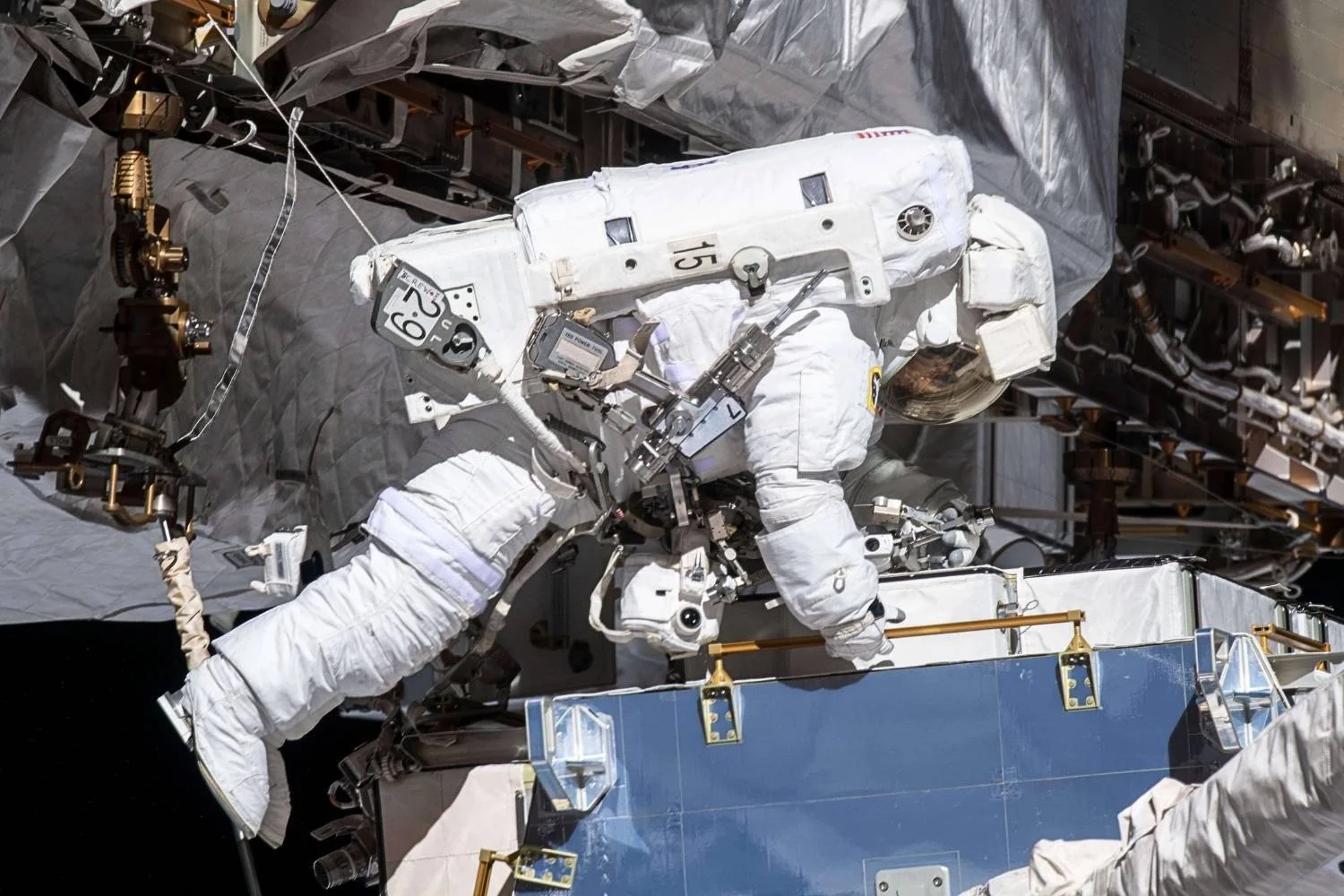
For astronauts conducting spacewalks outside the International Space Station, performance is not simply about fitness in the conventional sense. It involves endurance under pressure, recovery in isolation, adaptability in microgravity, and the ability to maintain focus while operating in one of the harshest environments imaginable.
Few people understand those demands better than Christina Koch.
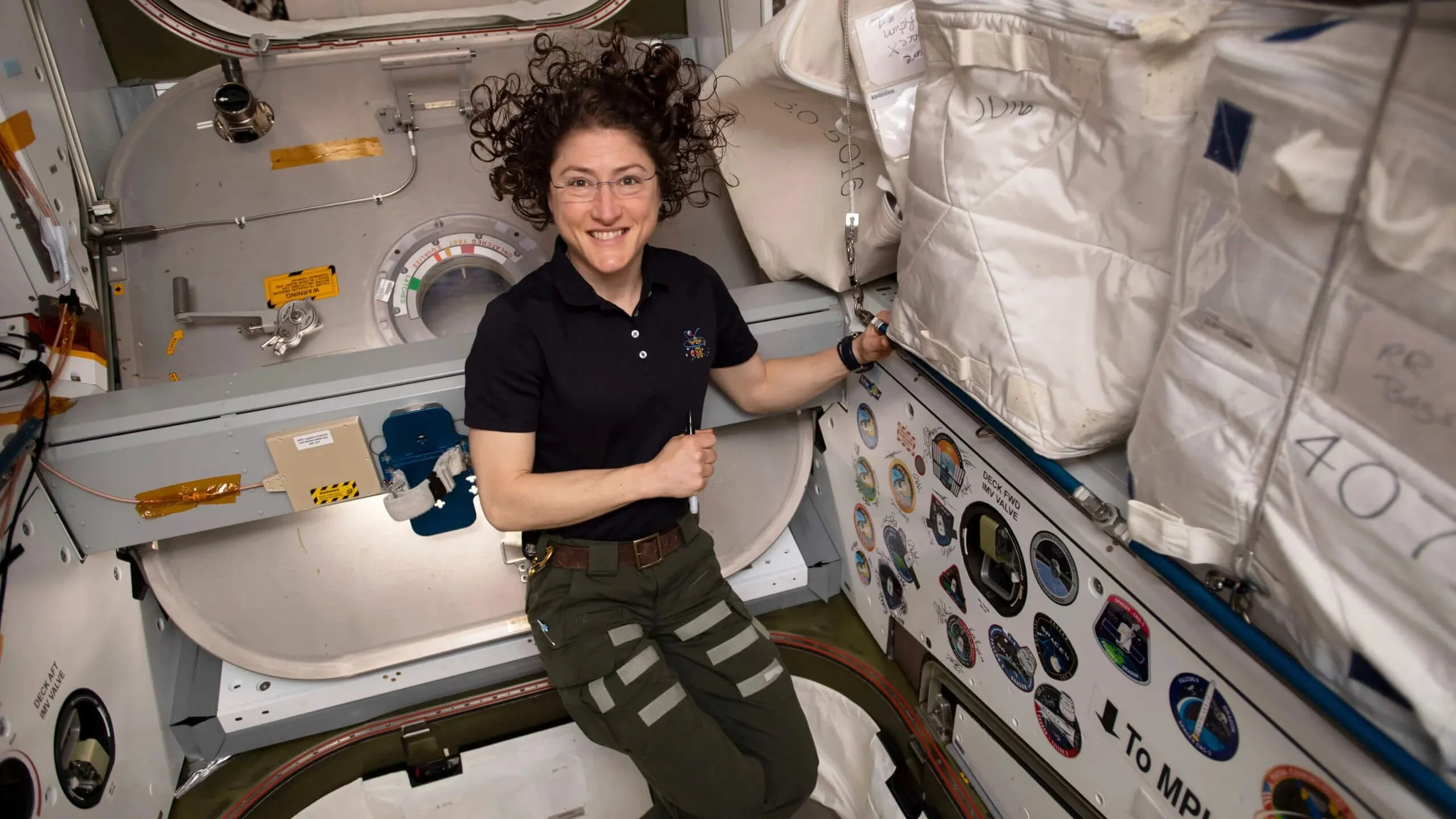
Koch spent 328 days aboard the International Space Station during her first mission, at the time, the longest continuous spaceflight by a woman. During that mission, she also participated in the first all-female spacewalk and completed multiple extravehicular activities outside the station.
In an in-depth interview with OnFitness Magazine, Koch described the realities of preparing for and performing spacewalks, offering rare insight into how astronauts train for extreme performance.
Spacewalking Is a Full-Body Endurance Event
Spacewalking is often viewed through a technological lens, but the physical demands are enormous.
According to Koch, a typical spacewalk involves six to seven hours of continuous work inside a pressurized suit, while the full operational timeline can stretch close to 12 hours from preparation to completion.
“Metabolically, it’s comparable to running a marathon,” Koch explained.
The challenge is compounded by the suit itself. Because the suit is pressurized, every movement meets resistance. Even gripping a tool or bending an arm requires sustained force against internal pressure.
“The suit also has mass,” Koch said, “so while there’s no weight in microgravity, there is inertia. Every movement has to be initiated and controlled.”
The result is a level of muscular fatigue most people will never experience. Koch compared the strain to squeezing a tennis ball continuously for six hours straight — one reason astronauts devote significant training time to forearm strength and grip endurance.
Why Astronauts Train Like Endurance Athletes
Long-duration spaceflight requires far more than technical skill.
Koch described astronaut preparation as a years-long process involving cardiovascular conditioning, resistance training, adaptability drills, and environmental exposure.
“We do extensive physical training to prepare for the environment and the work itself,” she said.
That preparation includes flying T-38 jets (a supersonic trainer aircraft), underwater simulations inside NASA’s massive Neutral Buoyancy Laboratory, and highly structured exercise programs designed to prepare the body for prolonged microgravity exposure.
Before becoming an astronaut, Koch said she had little experience with weight training. Today, strength work forms a major part of her routine.
“Now it’s deadlifts, squats — all of it,” she explained.
Yoga and breathwork also became essential tools, helping her manage recovery, flexibility, and composure during spacewalks.
Training the Human Body for Microgravity
One of the greatest physiological challenges astronauts face is the loss of bone density and muscle mass in space.
Without gravity, the body begins adapting quickly. Stabilizing muscles weaken, bone loss accelerates, and movement patterns change dramatically.
“If you follow the program properly, it’s possible to return to Earth stronger in certain major muscle groups than when you left.”
To counter those effects, astronauts aboard the ISS follow approximately two hours of mandatory daily exercise.
Cardiovascular training includes treadmill running while strapped into a harness, along with cycling on a seatless ergometer designed for microgravity.
For resistance training, astronauts use the Advanced Resistive Exercise Device (ARED), which simulates heavy loading through vacuum-cylinder resistance systems.
What a Space Workout Looks Like
Here's how that plays out in practice — a daily workout in space includes both cardio and resistance training, designed with trainers on the ground before and during the mission.
For cardio, astronauts use either a cycle ergometer — similar to a spin bike without a seat — or a treadmill.A typical cycling workout lasts 30 to 40 minutes and varies wattage at a single speed. Programs may resemble hill rides, interval rides, or randomized workouts found on commercial exercise bikes. As the mission progresses, trainers increase the overall wattage to build performance and cardiovascular benefit.
On the treadmill, astronauts wear a harness attached to the base of the machine to keep them in contact with the running surface. The system can be adjusted to change the apparent “body weight” of the run. Workouts typically last 30 to 40 minutes and include varying intervals. Progression usually involves increasing apparent body weight up to about 70 percent of normal body weight, then increasing speed as tolerated.
For resistance training, astronauts use the Advanced Resistive Exercise Device, or ARED. It uses vacuum pistons to create consistent resistance through the full range of motion. Research found this type of loading necessary to help prevent bone and muscle loss in microgravity.
ARED allows for a wide range of exercises, including deadlifts, squats, heel raises, shoulder presses, biceps curls, bench presses, and crunches. Astronauts typically perform major lower-body lifts daily, then rotate upper-body and accessory muscle exercises throughout the week.
Earlier approaches using resistance bands proved insufficient in preventing muscle and bone deterioration during extended missions. According to Koch, the ARED system represented a major advancement.
“If you follow the program properly,” she said, “it’s possible to return to Earth stronger in certain major muscle groups than when you left.”
However, not every physical system adapts equally.
Smaller stabilizing muscles — those responsible for posture, balance, and everyday movement on Earth — are much more difficult to maintain in microgravity and often require weeks of retraining after return.
Recovery in Space Is Different From Recovery on Earth
Spaceflight changes not only how astronauts train, but also how they recover.
“There’s no shower, no bath, no real way to physically decompress in the same sense,” Koch explained.
Hydration, sleep management, and caloric intake become essential performance tools. Before a spacewalk, Koch would begin adjusting her sleep schedule and increasing calories to prepare for the demands ahead. Afterward, recovery could be immediate and intense.
Following each of her six spacewalks, Koch said she would often wake up around 3 a.m. “absolutely starving,” get out of her crew quarters, and eat a full meal before returning to sleep. It was her body’s way of responding to the hours of sustained exertion, limited food, and restricted hydration required during the spacewalk itself.
But recovery was not only physical. After removing the suit and cooling garment, one of the first things Koch did was call her husband. Reconnecting with family became part of the reset — a reminder that recovery, even in space, is not just about muscles and calories. It is also about nervous-system regulation, emotional grounding, and returning from an extreme environment back into a human one.
What Koch's story ultimately shows is that even at the outer edge of human exploration, performance comes down to the same fundamentals — train hard, recover well, and never lose sight of the human connections that make the work meaningful.
Read the full OnFitness Magazine interview with Christina Koch here.