
Inside the Mind and Body of Astronaut Christina Koch: Fitness, Fear, and Spacewalking
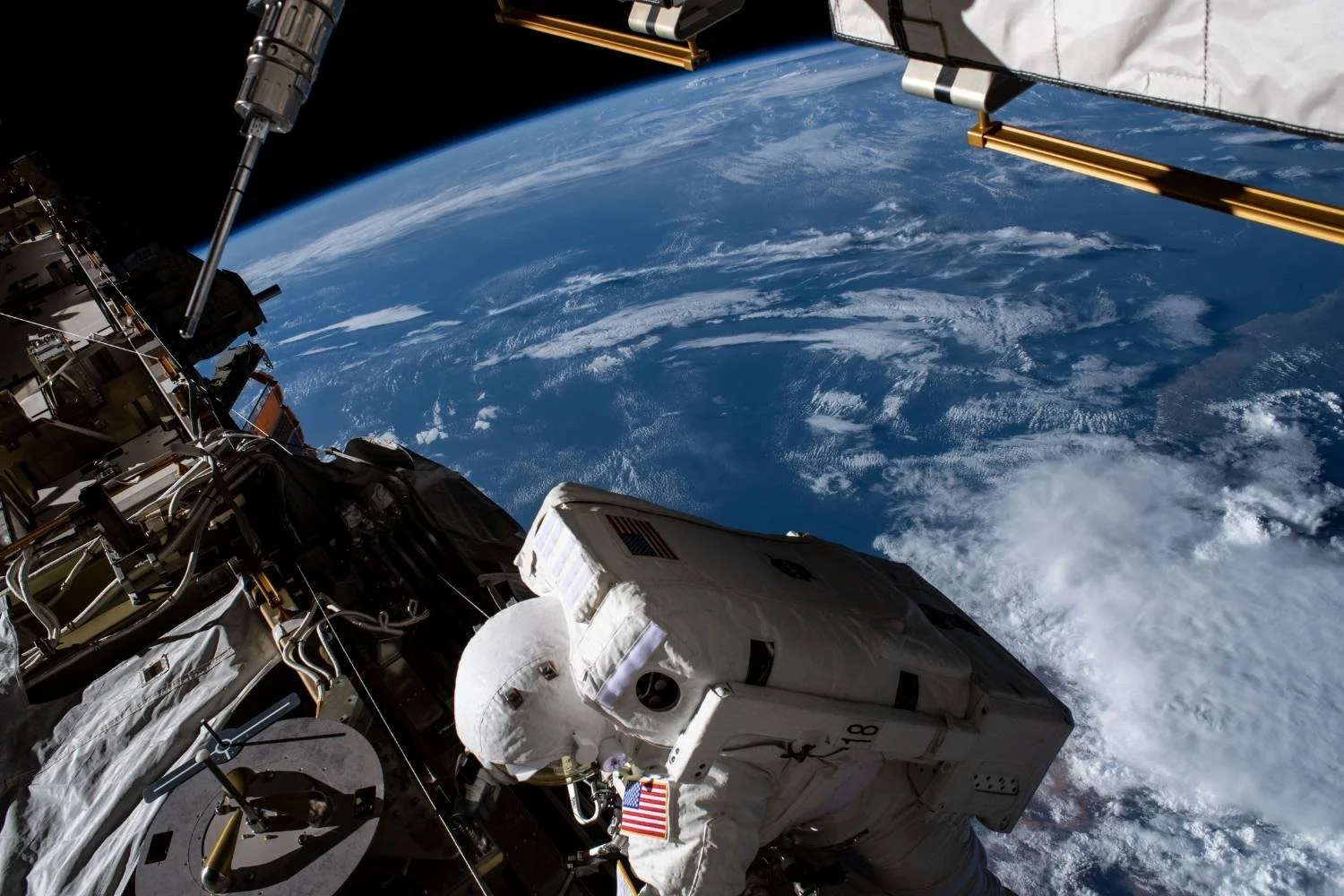
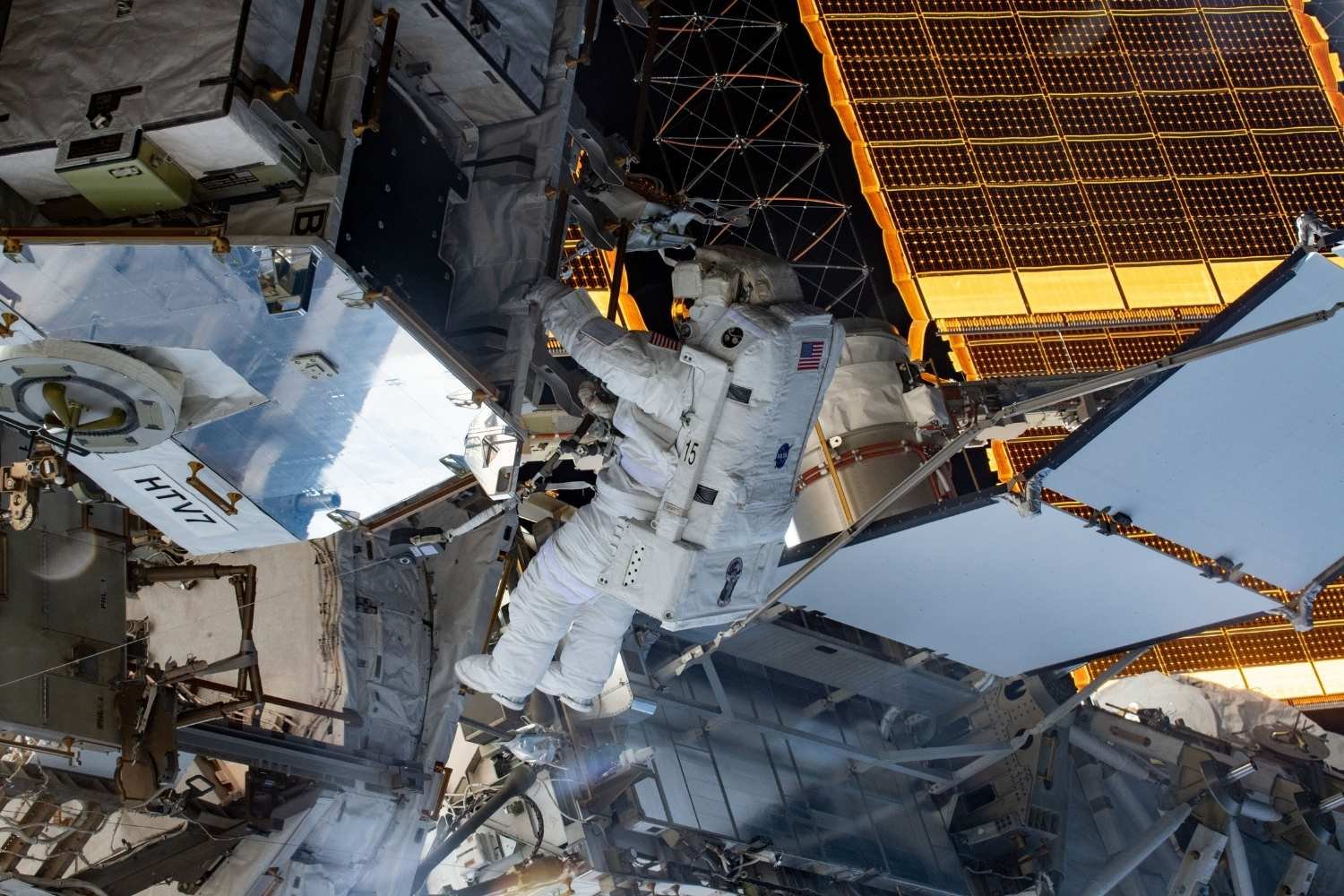
Christina Koch conducts a spacewalk 256 miles above Earth during her mission aboard the International Space Station.
Editor’s note: First published in 2020, this OnFitness Magazine interview with Christina Koch has been updated for 2026 as she prepares for the Artemis II mission. It offers a rare perspective on the physical and mental demands of spacewalking and long-duration spaceflight.
As she prepares for Artemis II, Koch shares a rare look at the physical demands, mental discipline, and resilience required to perform in space.
“As long as the human body has the building blocks it needs to perform at these high levels, it will do what it needs to get the job done.”— Christina Koch
On the Edge of Human Performance
Why would anyone willingly step outside a spacecraft into the vacuum of space?
Spacewalking — or extravehicular activity — is often described in technical terms. But at its core, it is something far more human: a test of composure, discipline, and physical resilience in one of the most hostile environments imaginable.
It demands a rare combination of qualities — precision under pressure, calm in isolation, and the ability to function while fully aware that survival depends on systems, training, and decision-making working in perfect alignment.
Those who operate in this environment are not driven by recklessness, but by clarity of purpose. The margin for error is too small for anything else.
Astronauts who conduct spacewalks represent a unique intersection of athleticism and engineering — individuals trained not only to endure extreme conditions, but to execute complex physical tasks while doing so.
Among them is Christina Koch.
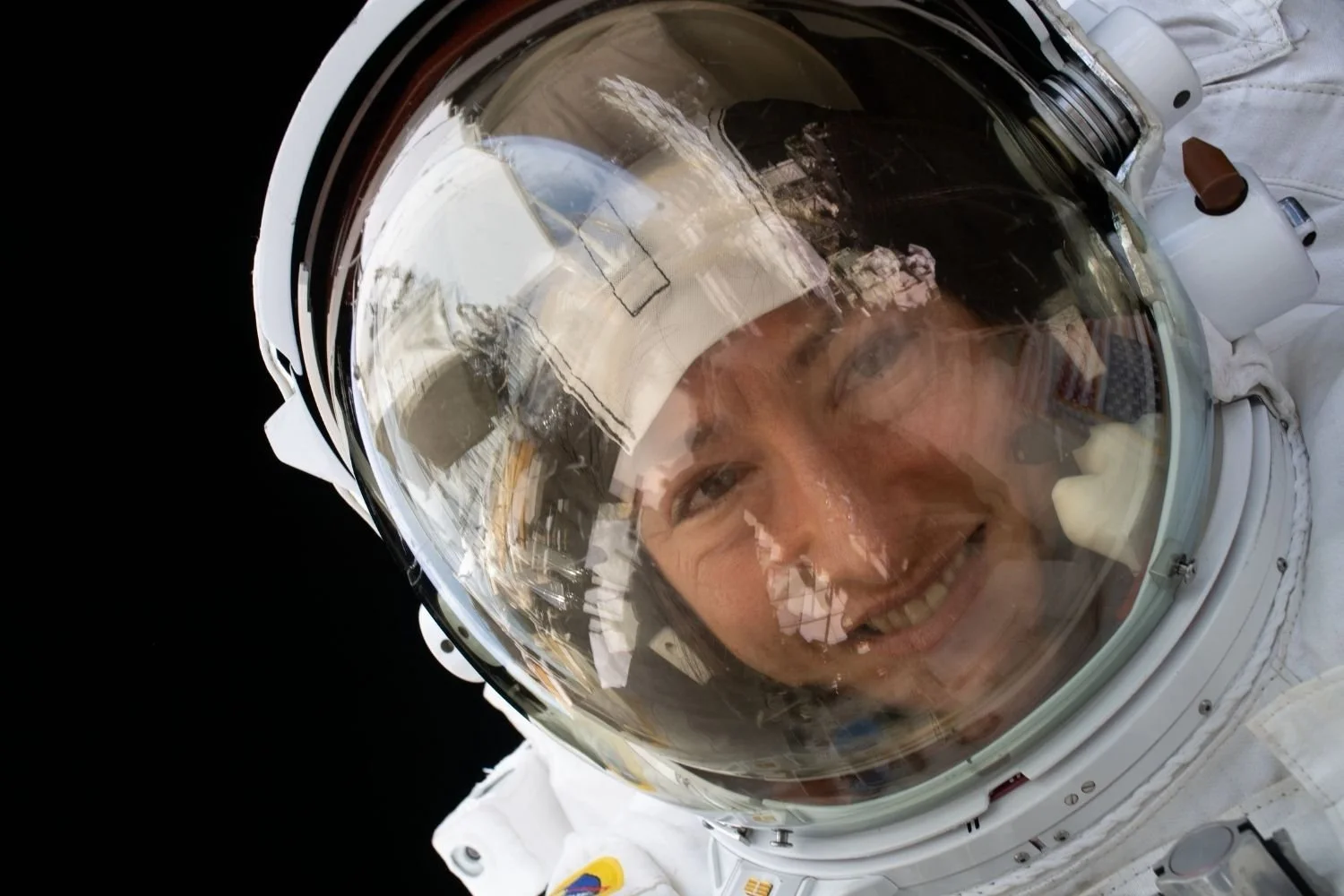
Who Is Christina Koch?
Christina Koch is an American astronaut and engineer whose first spaceflight became one of the most significant long-duration missions in recent history.
She launched to the International Space Station on March 18, 2019, and returned to Earth on February 6, 2020, after spending 328 days in orbit — the longest continuous spaceflight by a woman at the time.
During that mission, she:
Completed 5,248 orbits of Earth
Traveled approximately 223 million kilometers (139 million miles)
Logged the equivalent of 291 round trips to the Moon
Koch also took part in the first all-female spacewalk alongside Jessica Meir — a landmark moment in the history of human spaceflight.
But her mission extended far beyond records.
Her time aboard the ISS contributed directly to research that will shape future deep-space exploration, including preparation for missions under the Artemis program and eventual human travel to Mars.
While in orbit, she participated in multiple scientific investigations, including:
Vertebral Strength studies, examining how microgravity affects bone and muscle loss
Kidney Cells research, exploring links to kidney stones and osteoporosis in space
Microgravity Crystals experiments, which may contribute to advancements in cancer treatment
In many ways, her mission itself was an experiment — offering critical insight into how the human body adapts to long-duration spaceflight.
Beyond her work in space, Koch brings a strong physical and adventurous background. An avid surfer and rock climber, she embodies the blend of endurance, mental control, and calculated risk-taking that defines elite performance in extreme environments.
Inside the Mind and Body of a Spacewalker
In this conversation, Christina Koch reflects on fear, discipline, physical preparation, and the realities of performing at the highest level in one of the most extreme environments known to humans.
Facing Fear in Extreme Environments
OnFitness:
One of the pioneers of big-wave surfing in the late 1950s and ’60s, Fred Van Dyke, was once quoted in Life magazine as saying, “Astronauts make the best surfers.” What do you make of that?
Christina Koch:
That’s interesting. I think there are parallels — especially in the way you have to turn fear into focus.
OnFitness:
When you step outside the spacecraft, fear isn’t theoretical — it’s immediate. How do you process that in the moment and still perform at a high level?
Christina Koch:
When I go out of the hatch on a spacewalk, I have to detach myself from the magnitude of what I’m doing. If I try to take it all in at once, I can’t do my job effectively.
I make my world as small as it needs to be — focusing only on the task directly in front of me. From there, I build outward, step by step.
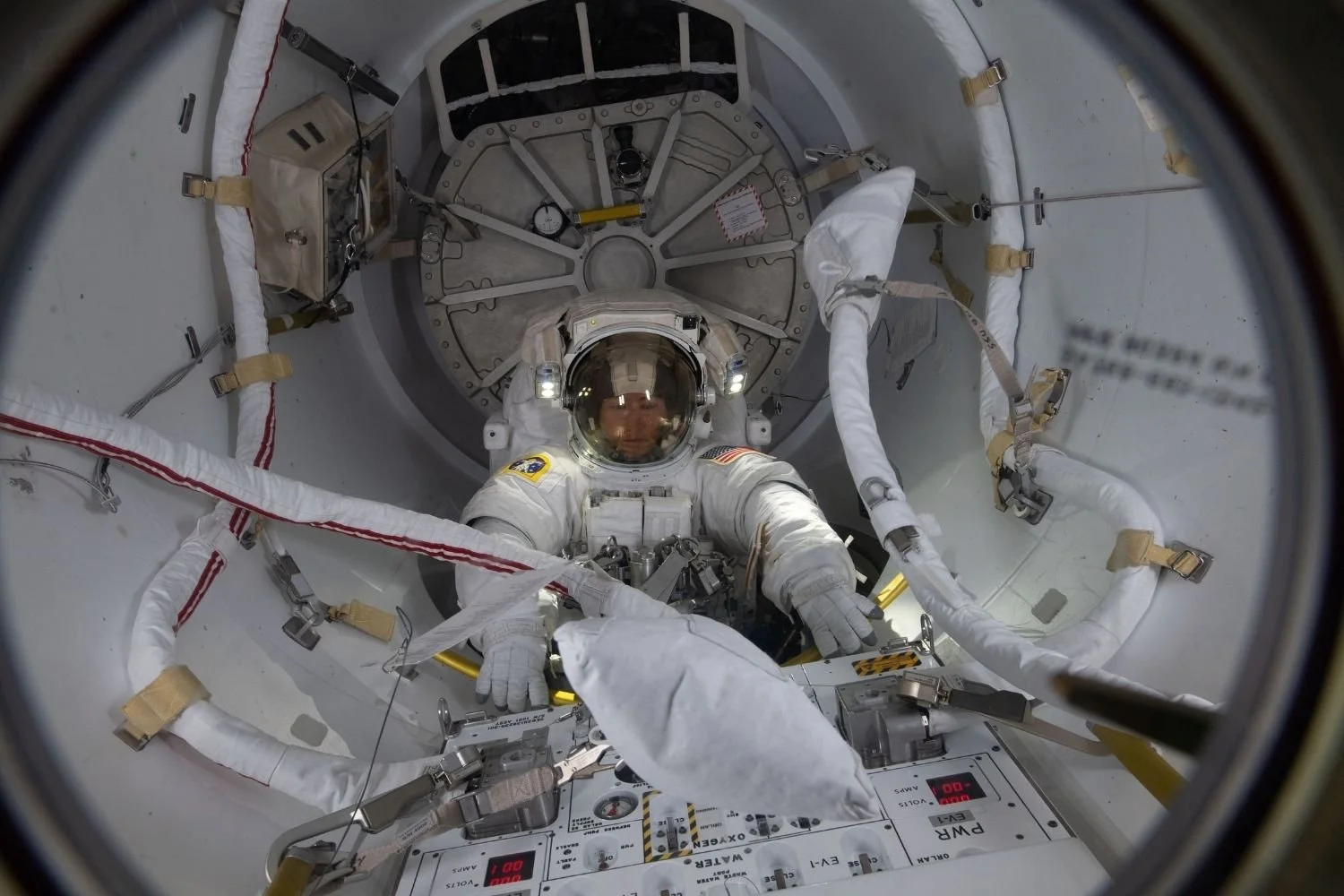
Training for the Demands of Spaceflight
OnFitness:
Spacewalking has been compared to marathon-level exertion inside a pressurized suit. What does it actually take — physically — to prepare your body for that kind of demand?
Christina Koch:
When your “sport” is spacewalking, you may only get a limited number of opportunities to actually do it. So in many ways, you spend your entire career preparing.
Living a fitness-focused lifestyle is a big part of that. There’s a perception that astronauts are primarily defined by intellectual ability — and of course that’s important — but there’s less awareness of the physical demands involved.
We do extensive physical training to prepare for the environment and the work itself, including flying T-38 jets — high-performance aircraft that are part of our training. The physical side of the job is significant.
OnFitness:
How far in advance does that level of training begin?
Christina Koch:
Training typically starts about two years before launch, once you’re assigned to a mission. In my case, it was just over a year, so it was more accelerated.
Before that, we go through astronaut candidate training, which can also take up to two years. That’s where we build a baseline across a wide range of skills while waiting for a flight assignment. After that comes the more intensive, mission-specific training.
NASA is also looking at ways to make that process more efficient — shortening timelines and allowing for more flexibility as mission needs evolve.
OnFitness:
What did your personal training look like?
Christina Koch:
A combination of cardio and strength training. Weight training was actually new for me — I hadn’t done much of it before becoming an astronaut. Now it’s a core part of my routine: deadlifts, squats, all of it.
Yoga has also been incredibly valuable. I use breathwork extensively during spacewalks, and yoga has helped with both flexibility and recovery, especially alongside heavier strength training.
Building Strength in Microgravity
OnFitness:
How do you maintain fitness while in space?
Christina Koch:
We have about two hours of scheduled exercise every day — a mix of cardio and resistance training.
For cardio, we use a cycle ergometer, which doesn’t have a seat — just pedals, handles, and a display. There’s also a treadmill, but you have to wear a harness to keep yourself in contact with it, so it feels a bit like running with added load.
For strength training, we use a system called the Advanced Resistive Exercise Device, or ARED. It uses vacuum cylinders to create resistance, allowing for a consistent load throughout the full range of motion.
That system was developed because earlier methods — like resistance bands — weren’t enough to prevent bone and muscle loss in microgravity. With ARED, we can significantly counteract those effects.
If you follow the program properly, it’s possible to return to Earth stronger in certain major muscle groups than when you left.
That said, smaller stabilizing muscles — the ones used for everyday movement like standing and balance — are harder to maintain in space and require rebuilding after return.
For me, I came back able to do more pull-ups than before I left — which still surprises people.
Endurance Under Pressure
OnFitness:
What is the most physically demanding aspect of working in space?
Christina Koch:
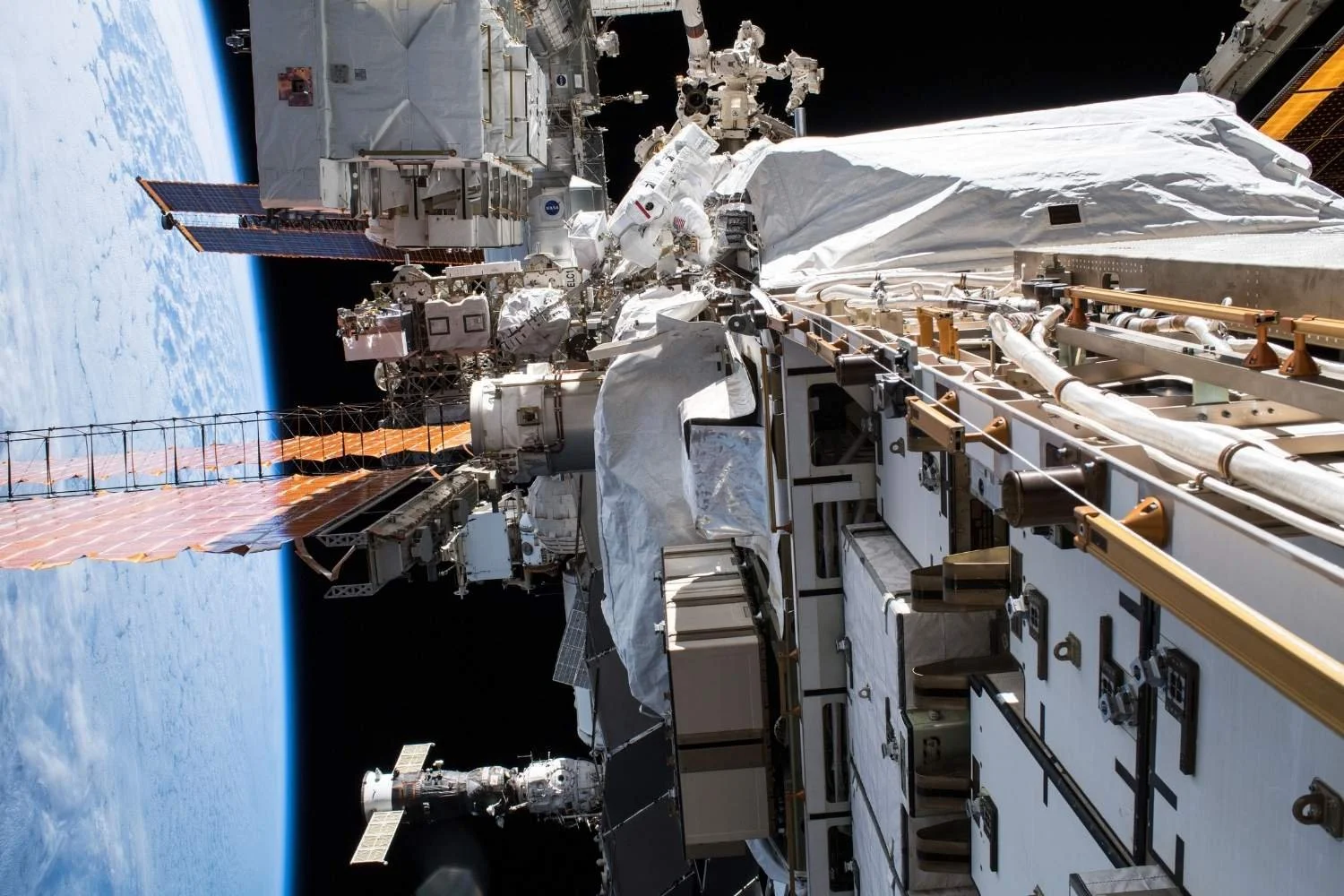
It’s definitely spacewalking. A typical spacewalk involves six to seven hours of continuous, physically demanding work inside the suit — but the full timeline, from preparation to completion, can be close to 12 hours. During that time, I can’t eat, and I only have a limited supply of water.
Metabolically, it’s comparable to running a marathon. The suit itself is pressurized, so every movement is resisted. Even something as simple as bending your arm or gripping a tool means working against that pressure.
The suit also has mass — so while there’s no weight in microgravity, there is inertia. Every movement has to be initiated and controlled.
It’s extremely taxing. Imagine squeezing a tennis ball continuously for six hours — that’s similar to the level of effort required just to operate your hands. We do a lot of forearm training for that reason.
OnFitness:
Are you dealing with heat and fatigue inside the suit? How do you manage that physically?
Christina Koch:
I definitely sweat. There’s a cooling garment that circulates water through tubes across my body, which helps regulate temperature, but hydration is critical to prevent cramping.
Our training takes place in a massive pool with a full-scale mock-up of the space station. It’s about 40 feet deep and roughly 100 by 200 feet in size. That’s where we simulate the duration and physical demands of a spacewalk.
We also prepare in advance by adjusting sleep cycles and nutrition. I shift my schedule earlier in the days leading up to a spacewalk and make sure I’m consuming enough calories — often eating a substantial amount before 7 a.m. — to sustain that level of output.
OnFitness:
What was daily nutrition like on the space station?
Christina Koch:
Most of our food is dehydrated. We rehydrate it using a water dispenser, wait a few minutes, and then eat directly from a pouch — usually with a spoon.
I didn’t use a fork or knife for nearly eleven months. But there’s actually a wide variety of options, and I adapted to it pretty well.
OnFitness:
When you went out on your first spacewalk, did your training feel sufficient?
Christina Koch:
There’s no way to fully know until you’re out there. You prepare as thoroughly as possible, but ultimately you rely on your body and your training to take over — to manage the stress, the environment, and the demands of the task.
It becomes about drawing on everything you’ve built over time.
OnFitness:
How do you deal with physical strain or injury during a mission?
Christina Koch:
Often, you don’t even register it in the moment. You’re so focused on the technical and safety aspects of the work that things like soreness or fatigue don’t fully surface until afterward.
It’s really about maintaining focus and working through it in real time.
Recovery and Physical Resilience
OnFitness:
What does recovery look like after a spacewalk?
Christina Koch:
It’s interesting — recovery in space is very different from what we’re used to on Earth. There’s no shower, no bath, no real way to physically decompress in the same sense.
For me, after every spacewalk — and I did six — I would wake up around 3 a.m. absolutely starving. I’d get up, leave my crew quarters, and eat a full meal before going back to sleep, even after eating a lot earlier.
We do get some downtime — usually about half a day — to recover. But a big part of recovery is mental.
After each spacewalk, one of the first things I did was call my husband. Reconnecting with the people I care about was incredibly important. That human connection helped me reset more than anything else.
Origins and Perspective
OnFitness:
When did you first know you wanted to become an astronaut?
Christina Koch:
As long as I can remember. I’ve always been drawn to environments that make you feel small — the night sky, the ocean.
I grew up in coastal North Carolina, and I was fascinated by anything that stretched out endlessly in front of me. That sense of scale made me think about our place in the universe.
I had pictures on my walls of Antarctica, the ocean, space — places that represented exploration. Like a lot of kids, I wanted to be an astronaut. I just never grew out of it.
OnFitness:
What did it feel like the moment you entered space?
Christina Koch:
Launch is about eight minutes of continuous acceleration — you feel the G-forces pressing against your chest as you’re moving straight up at incredible speed.
By the time the engines cut off, there’s no question where you are. You float out of your seat, still secured by your harness, and when you look out the window and see Earth below you — it’s extraordinary.
I remember looking across at Nick Hague, who launched with me, and we just smiled. It’s hard to put into words.
OnFitness:
Does that experience make you feel small, or something else?
Christina Koch:
It makes me feel small, but in a meaningful way. It puts everything into perspective.
You realize how vast everything is — and at the same time, that even something small can be part of something much bigger. I find that idea really powerful.
OnFitness:
Would you describe spaceflight as a spiritual experience?
Christina Koch:
There’s definitely a philosophical — even spiritual — aspect to it. It changes how you see yourself, how you see Earth, and how you understand your place in the universe.
You realize that nothing is truly isolated — everything is part of something larger. Seeing Earth from that perspective is profound.
Purpose and Teamwork
OnFitness:
What kind of work were you doing on the space station?
Christina Koch:
Our primary focus is science — research that can only be conducted in microgravity — and applying those findings back on Earth.
We’re also testing technologies for future exploration. Programs like Artemis program are focused on returning humans to the Moon and eventually going to Mars.
We conduct pharmaceutical research, study physical systems, observe Earth’s climate, agriculture, and oceans — everything we do is designed to have real-world impact.
We also maintain the station itself — repairs, upgrades, installations — and that’s often when spacewalks are required.
OnFitness:
What did you enjoy most about the experience?
Christina Koch:
The spacewalks were incredible, but the most meaningful part was the teamwork.
You’re part of a global effort — working with people from the U.S., Russia, Japan, Canada, Europe — all focused on a shared mission.
It’s also the teams behind the scenes: the engineers, trainers, planners. Being part of something that large and collaborative was incredibly humbling. That’s what I miss the most.
OnFitness:
What is the environment like in space — temperature, conditions?
Christina Koch:
Externally, temperatures can range from about minus 300 to plus 300 degrees Fahrenheit. But inside the station, it’s carefully controlled — around 72 degrees most of the time.
For nearly eleven months, I didn’t experience wind, rain, or temperature changes. That in itself is a very unusual experience.
Adapting to Extremes
OnFitness:
How do you manage temperature changes during a spacewalk?
Christina Koch:
During spacewalks, I control my personal thermal system. The cooling garment I wear circulates water through tubes across my body, and I can adjust how much of that water is cooled versus ambient.
The challenge is finding a setting that doesn’t require constant adjustment. We transition between daylight and darkness roughly every 45 minutes, so temperatures shift frequently.
Over time, you learn to anticipate those changes — cooling slightly before entering sunlight, then adjusting again as you move back into darkness. It becomes a matter of balance.
Fear, Focus, and Transferable Skills
OnFitness:
Did activities like surfing and rock climbing help prepare you for spacewalking?
Christina Koch:
Absolutely. Both of those experiences taught me how to work through fear and turn it into focus.
With surfing, it’s that moment standing on the shore, looking out at the waves, and deciding to paddle out anyway — pushing past hesitation.
Rock climbing has more direct parallels. You’re constantly aware of your equipment, your lines, your safety systems — and it’s very team-oriented. There’s also the exposure to height.
During spacewalks, I would sometimes look down and see Earth 250 miles below me. You take that in for a moment — and then you refocus and continue the task. That ability to reset your focus is critical.
Adapting to Microgravity
OnFitness:
Do astronauts experience motion sickness in space?
Christina Koch:
Yes — typically at two points: when we first arrive in space, and when we return to Earth.
It comes down to how the brain processes signals. On Earth, motion sickness happens when what you see doesn’t match what your inner ear is telling you. In space, your brain initially struggles because your inner ear is no longer providing useful orientation cues.
Eventually, your brain adapts and stops relying on those signals. But when you return to Earth, it has to relearn that process again.
For me, I could stand upright just fine with my eyes open, but if I closed them, I’d lose balance. It took a few weeks to fully readjust.
Sleep and Recovery in Orbit
OnFitness:
How well did you sleep in space?
Christina Koch:
Surprisingly well — better than I ever have on Earth.
You sleep in a floating sleeping bag, with your arms secured so they don’t drift. It takes some getting used to, but once you adapt, it’s incredibly comfortable.
You’re not dealing with pressure points or gravity — your body is just in a neutral position. I think good sleep was a major factor in being able to perform consistently over such a long mission.
Looking Ahead: Mars and Beyond
OnFitness:
Do you see yourself going to Mars?
Christina Koch:
I would absolutely want to. I think most astronauts feel that way — it’s part of why we chose this path.
NASA is working toward human missions to Mars in the coming decades, with a return to the Moon as a critical step along the way through programs like Artemis program.
In the meantime, robotic missions — like the Perseverance rover — are helping us understand the planet and search for signs of life.
That question — whether life exists beyond Earth — is one of the most important we can ask. Being part of answering it would be extraordinary.
Advice for the Next Generation
OnFitness:
For people striving to perform at a high level — whether in sport, business, or exploration — what mindset has mattered most in your own journey?
Christina Koch:
Follow your passions — that’s the most important thing.
It’s good to have a goal, but you don’t need to follow a rigid path to get there. When I was younger, I remember writing down a checklist of everything I was “supposed” to do to become an astronaut — and then realizing that wasn’t how I wanted to live.
If you’re going to contribute meaningfully, it should come from your own interests and strengths.
Looking back, my path included a lot of unconventional choices — working in Antarctica, spending time rock climbing, sailing, surfing. Those experiences mattered. In fact, during my astronaut interview, we talked more about those than about engineering.
Another principle I’ve always followed is this: do the things that scare you.
Not reckless risks — but the things that challenge you because they feel just out of reach. Those are often the paths that lead to the most growth and fulfillment.
When you move toward those moments instead of away from them, you not only grow personally — you also put yourself in a position to contribute more to the world.
Ad Astra
OnFitness:
Christina, thank you for sharing your experience with us. It’s been a privilege.
Christina Koch:
Thank you — it’s been a pleasure.
“I make my world as small as it needs to be — focusing only on the task directly in front of me.”
— Christina Koch
As human space exploration enters its next chapter, Koch’s perspective reveals what it takes to perform, adapt, and endure at the outer limits of human capability.