
Creatine Beyond Muscle: Benefits for Brain Health, Performance, and Recovery
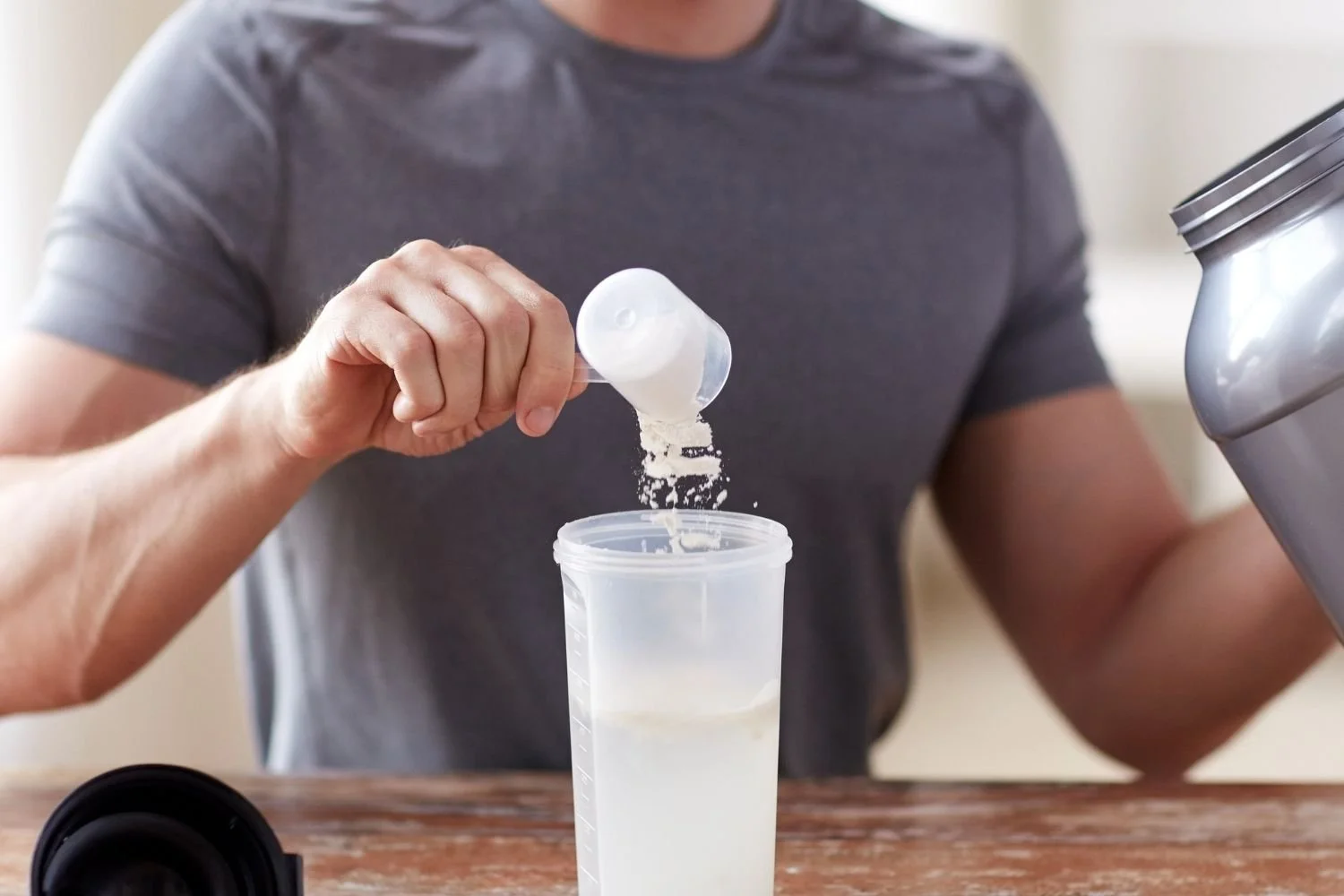
The science of performance, brain health, and recovery — and what the evidence actually supports in 2026.
Creatine has long been associated with strength training and muscle growth. But emerging research shows its role extends far beyond the gym — influencing brain function, recovery, and long-term health outcomes. Here's a clear breakdown of what creatine is, how it works, and where it fits into your routine.
What Is Creatine?
Creatine is a naturally occurring compound found in muscle cells and the brain. It is synthesized in the liver, kidneys, and pancreas from amino acids — primarily arginine and glycine, with methionine contributing a methyl group to the process. Roughly 95% of the body's creatine is stored in skeletal muscle, where it plays a central role in energy production.
How Creatine Works
Creatine supports the phosphocreatine system — one of the body's primary pathways for rapid energy production. This reaction helps regenerate ATP (adenosine triphosphate), the body's immediate energy currency, particularly during short bursts of high-intensity activity such as sprinting or resistance training.
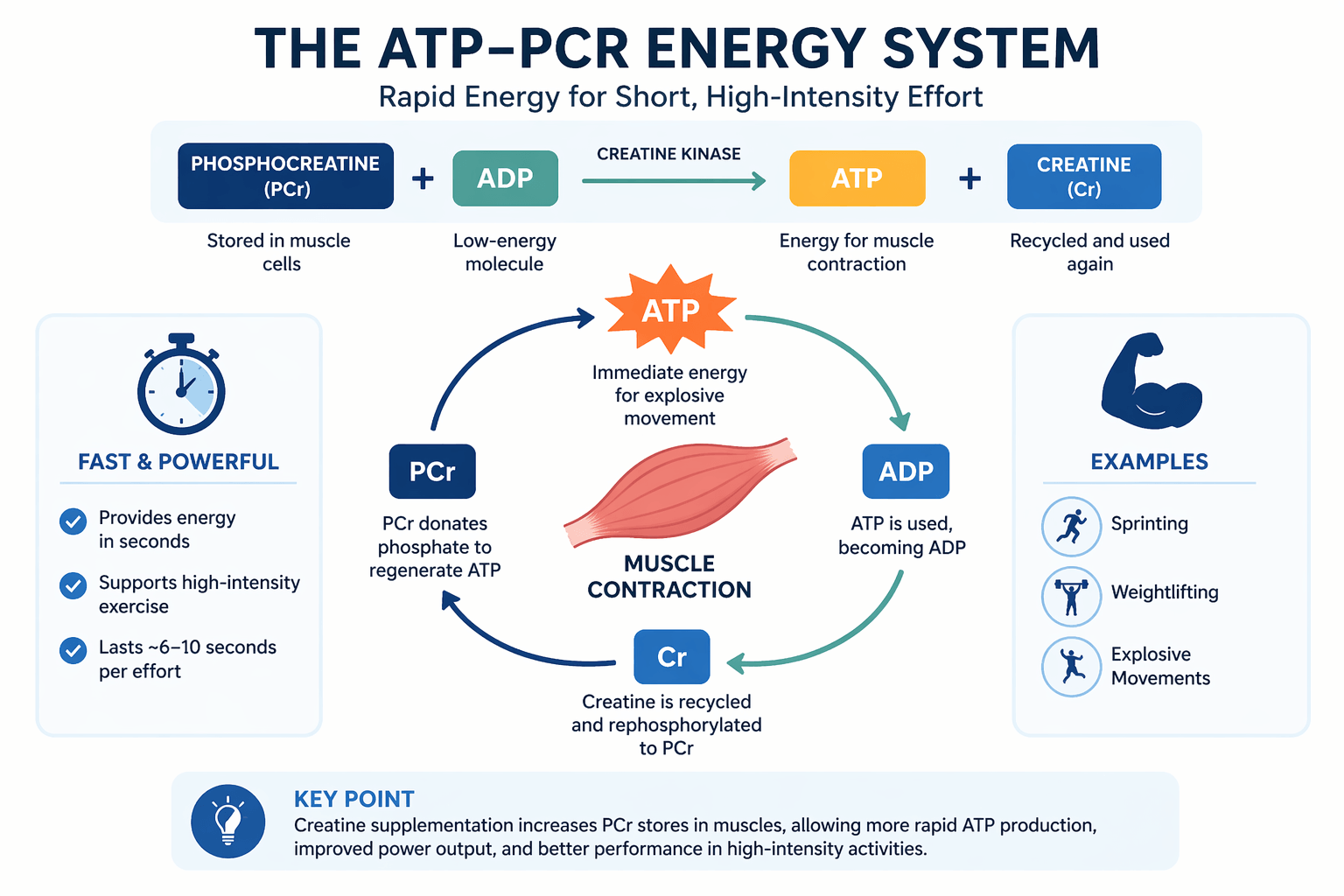
Creatine helps regenerate ATP—the body’s immediate energy source for short, high-intensity efforts.
THE PHOSPHOCREATINE REACTION
When muscles work hard, ATP is depleted rapidly. Phosphocreatine (PCr) donates a phosphate group to ADP, regenerating ATP almost instantly.
Proven Benefits for Physical Performance
Creatine monohydrate is one of the most extensively studied supplements in sports nutrition. A 2025 systematic review and meta-analysis published in Nutrients confirmed creatine's benefits for strength and power performance across upper- and lower-body measures, and a broader body of research supports its role in muscle building more generally. Key findings include:
Increased strength and power output
Enhanced high-intensity exercise performance
Support for lean muscle mass gains when combined with resistance training

Creatine and Brain Function
While muscle benefits are well established, newer research highlights creatine's significant role in the brain. The brain requires a constant supply of ATP, and creatine helps maintain cellular energy balance — particularly under stress, sleep deprivation, or mental fatigue.
COGNITIVE PERFORMANCE UPDATE
"A 2024 systematic review and meta-analysis in Frontiers in Nutrition found that creatine supplementation improved memory, attention, and processing speed — though it found no significant effect on broader measures of overall cognitive function."
While muscle benefits are well established, newer research highlights creatine's significant role in the brain. The brain requires a constant supply of ATP, and creatine helps maintain cellular energy balance — particularly under stress, sleep deprivation, or mental fatigue. Emerging evidence also suggests improvements in memory and cognitive processing speed, with the most pronounced cognitive benefits observed in older adults — making creatine increasingly relevant well beyond athletic populations.
Recovery, Injury, and Fatigue
Evidence on creatine's role in exercise recovery is mixed. A 2021 systematic review and meta-analysis in the International Journal of Sport Nutrition and Exercise Metabolism found that creatine supplementation did not significantly reduce muscle soreness or inflammation after intense exercise, though it modestly lowered one marker of muscle damage (creatine kinase) at the 48-hour mark. Results vary depending on training protocol, dose, and population, and creatine's role in glycogen replenishment and performance across repeated exercise bouts remains an area of ongoing research.
Creatine and Aging
Loss of muscle mass and strength — known as sarcopenia — is a major concern with aging. A 2019 review in the Journal of Clinical Medicine supports creatine as a safe and effective adjunct for healthy aging, with evidence showing:
Improved muscle strength in older adults
Better functional performance, including walking speed and balance
Potential indirect benefit to bone health via increased muscle loading
Who Should Consider Creatine?
Research has expanded creatine's relevance well beyond the weight room. While athletes remain the most studied population, evidence now supports meaningful benefits across a broad range of people.
Strength & Power Athletes
The most studied group. Creatine consistently improves strength output, power, and lean mass gains when combined with resistance training.
Endurance Athletes
Benefits center on recovery support — faster glycogen replenishment between training sessions and race efforts, with more limited and mixed evidence for reducing muscle damage.
Older Adults
Creatine combined with resistance training helps counter sarcopenia — age-related muscle loss — and supports balance and functional mobility.
High Cognitive Demand
Students and professionals under sustained mental load may benefit from creatine's role in brain energy metabolism, particularly during sleep deprivation or high stress.
Is Creatine Safe?
Well-established safety profile
Creatine monohydrate is widely regarded as safe for healthy individuals. There is no consistent link to kidney damage in healthy populations, it is well tolerated at recommended doses, and long-term studies lasting up to five years show no major adverse effects. The International Society of Sports Nutrition states that creatine is one of the most effective and safest supplements available.
Common Myths, Debunked
"Creatine causes water retention and bloating."
Creatine increases intracellular water inside muscle cells — this is part of what supports performance. It does not cause the kind of subcutaneous bloating people often fear.
"It's only for bodybuilders."
Evidence now supports benefits for endurance athletes, older adults, people under cognitive stress, and those prioritizing healthy aging — not just those focused on muscle size.
"You need to cycle creatine on and off."
There is no scientific requirement to cycle creatine. Consistent daily use at recommended doses is both effective and safe for long-term supplementation.
How to Take Creatine
The research is clear on form and dose. Creatine monohydrate remains the gold standard — it is the most studied, most affordable, and no other form has been shown to be meaningfully superior.
| VARIABLE | RECOMMENDATION |
|---|---|
| Form | Creatine monohydrate (most researched form) |
| Daily dose | 3–5 g per day |
| Loading phase | Optional: 20 g/day split into 4 doses for 5–7 days to saturate stores faster |
| Timing | Not critical — consistency matters more than timing |
| With food? | Can be taken with or without food; some evidence favors taking it around meals |
The bottom line
Creatine is no longer just a performance supplement — it is a well-supported, multi-functional compound with benefits that extend into brain health, recovery, and aging. As research continues to evolve, its role in human performance and longevity is becoming increasingly clear. For most healthy adults, it represents one of the most cost-effective, evidence-backed supplements available.
What to Look for When Buying Creatine
For readers who want a simple creatine option, choose a plain creatine monohydrate powder with a clear serving size and third-party testing. Look for products that are NSF Certified for Sport or carry similar third-party testing, which adds an extra layer of quality control — particularly useful for athletes subject to banned-substance testing, but a good general marker of product quality for anyone.
Creatine is generally well tolerated by healthy adults at standard doses, but it may not be appropriate for everyone. Anyone with kidney disease, medical conditions, pregnancy-related questions, or medication concerns should speak with a healthcare professional before using creatine.
Frequently Asked Questions
The most common questions about creatine — answered directly from the research.
-
Studies lasting up to five years show no major adverse effects in healthy individuals at 3–5 g per day. There is no consistent link to kidney damage in healthy populations, and no need to cycle off. The International Society of Sports Nutrition considers creatine monohydrate one of the safest supplements available.
-
Emerging evidence suggests yes. The brain relies heavily on ATP for function, and creatine helps maintain cellular energy balance under stress. A 2024 systematic review in Frontiers in Nutrition found that creatine supplementation improved memory, attention, and processing speed, though it found no significant effect on broader measures of overall cognitive function. Separately, research on short-term sleep deprivation has found creatine may help offset fatigue-related declines in cognitive performance.
-
No — a loading phase is optional, not required. Taking 3–5 g daily will fully saturate your muscle creatine stores within three to four weeks. A loading phase (20 g/day for 5–7 days) simply accelerates that process. Both approaches reach the same endpoint; loading just gets you there sooner.
-
Not in the way most people fear. Creatine draws water into muscle cells — intracellular water — which is part of what supports strength and performance. It does not cause subcutaneous water retention (puffiness under the skin). Some people notice a small increase in body weight or a fuller muscle appearance, especially during a loading phase, but this reflects healthy water inside the muscle, not bloating.
-
Creatine monohydrate. Despite marketing around newer forms like creatine HCl or buffered creatine, no alternative has been shown to be meaningfully superior in well-controlled research. Monohydrate is the most studied, most affordable, and the form used in virtually all clinical trials on this topic.
Further Reading on Health & Performance
Explore more science-based insights from OnFitness Magazine.
How to Heal Cuts Faster:
The Science of Recovery, Nutrition, and Tissue Repair
https://onfitnessmag.com/more/heal-cuts-faster-recovery-nutritionExplore More in Nutrition
Evidence-based insights on supplements, diet, and performance.
https://onfitnessmag.com/nutritionRecovery Strategies That Actually Work
Science-backed approaches to improve recovery and reduce fatigue.
https://onfitnessmag.com/recovery
REFERENCES
Kreider, R. B., et al. (2017). International Society of Sports Nutrition position stand: creatine supplementation. Journal of the International Society of Sports Nutrition, 14, 18.
Kazeminasab, F., et al. (2025). The effects of creatine supplementation on upper- and lower-body strength and power: a systematic review and meta-analysis. Nutrients, 17(17), 2748.
Xu, C., Bi, S., Zhang, W., & Luo, L. (2024). The effects of creatine supplementation on cognitive function in adults: a systematic review and meta-analysis. Frontiers in Nutrition, 11:1424972.
Prokopidis, K., Giannos, P., Triantafyllidis, K.K., Kechagias, K.S., Forbes, S.C., & Candow, D.G. (2023). Effects of creatine supplementation on memory in healthy individuals: a systematic review and meta-analysis of randomized controlled trials. Nutrition Reviews, 81(4), 416–427.
Candow, D.G., Forbes, S.C., Chilibeck, P.D., Cornish, S.M., Antonio, J., & Kreider, R.B. (2019). Effectiveness of creatine supplementation on aging muscle and bone: focus on falls prevention and inflammation. Journal of Clinical Medicine, 8(4), 488.
Northeast, B., & Clifford, T. (2021). The effect of creatine supplementation on markers of exercise-induced muscle damage: a systematic review and meta-analysis of human intervention trials. International Journal of Sport Nutrition and Exercise Metabolism, 31(3), 276–291.
Forbes, S.C., Candow, D.G., Neto, J.H.F., Kennedy, M.D., Forbes, J.L., Machado, M., et al. (2023). Creatine supplementation and endurance performance: surges and sprints to win the race. Journal of the International Society of Sports Nutrition, 20(1), 2204071.
Gordji-Nejad, A., et al. (2024). Single dose creatine improves cognitive performance and induces changes in cerebral high energy phosphates during sleep deprivation. Scientific Reports, 14.