
How to Get Rid of a Loose Belly: What Actually Works
CORE TRAINING GUIDE
If you're trying to tighten a loose belly, you're not alone. It's one of the most common fitness goals — and one of the most misunderstood.
Let's start with the honest truth:
You cannot spot reduce belly fat.
Crunches alone will not flatten your stomach.
Quick fixes don't work.
But you can tighten your midsection by combining smart strength training, proper core work, gradual fat loss, and improved posture. Here's exactly how.
First: Why Your Belly Might Feel Loose
A "loose belly" usually comes from one or a combination of these:
Excess body fat
Weak core muscles
Poor posture
Loose skin after weight loss or pregnancy
Bloating from diet habits
Understanding which applies to you helps determine the right solution. For most people, it's not just fat — it's weak deep core muscles and poor posture layered on top of some body fat.
Step 1: Build Muscle (This Is Non-Negotiable)
If you want a firmer stomach, you need more muscle on your body. Muscle:
Increases metabolism
Improves body composition
Tightens your overall shape
Creates a firmer base underneath your midsection
Full-body strength training three to four times per week is essential.
Focus on Compound Movements
Squats
Deadlifts
Lunges
Rows
Push-ups
Overhead presses
These exercises burn more calories than isolated ab work and stimulate hormonal responses that support fat loss. If you're only doing cardio, you're missing the key driver of body recomposition.
Step 2: Train Your Core Properly (Not Just Crunches)
Crunches train one movement — spinal flexion, or bending forward. But your core's main job isn't bending. It's stabilizing your spine and resisting movement. That distinction changes everything.
Why Crunches Don't Flatten Your Stomach
They don't burn meaningful fat. Crunches burn minimal calories and won't reduce belly fat.
They emphasize surface abs only. They mainly target the rectus abdominis (the visible six-pack muscle) but do very little for the transverse abdominis — the deep muscle that acts like a natural corset and pulls your waist inward.
They don't correct posture. Poor posture can make your stomach appear to stick out. Crunches don't fix that — and excessive spinal flexion can reinforce rounded shoulders.
They don't teach bracing. A tight midsection requires internal tension — that is, bracing. Crunches don't train this effectively.
If you want your stomach to look tighter, you must strengthen the deep core and improve stability.
Core Exercises That Actually Tighten Your Midsection
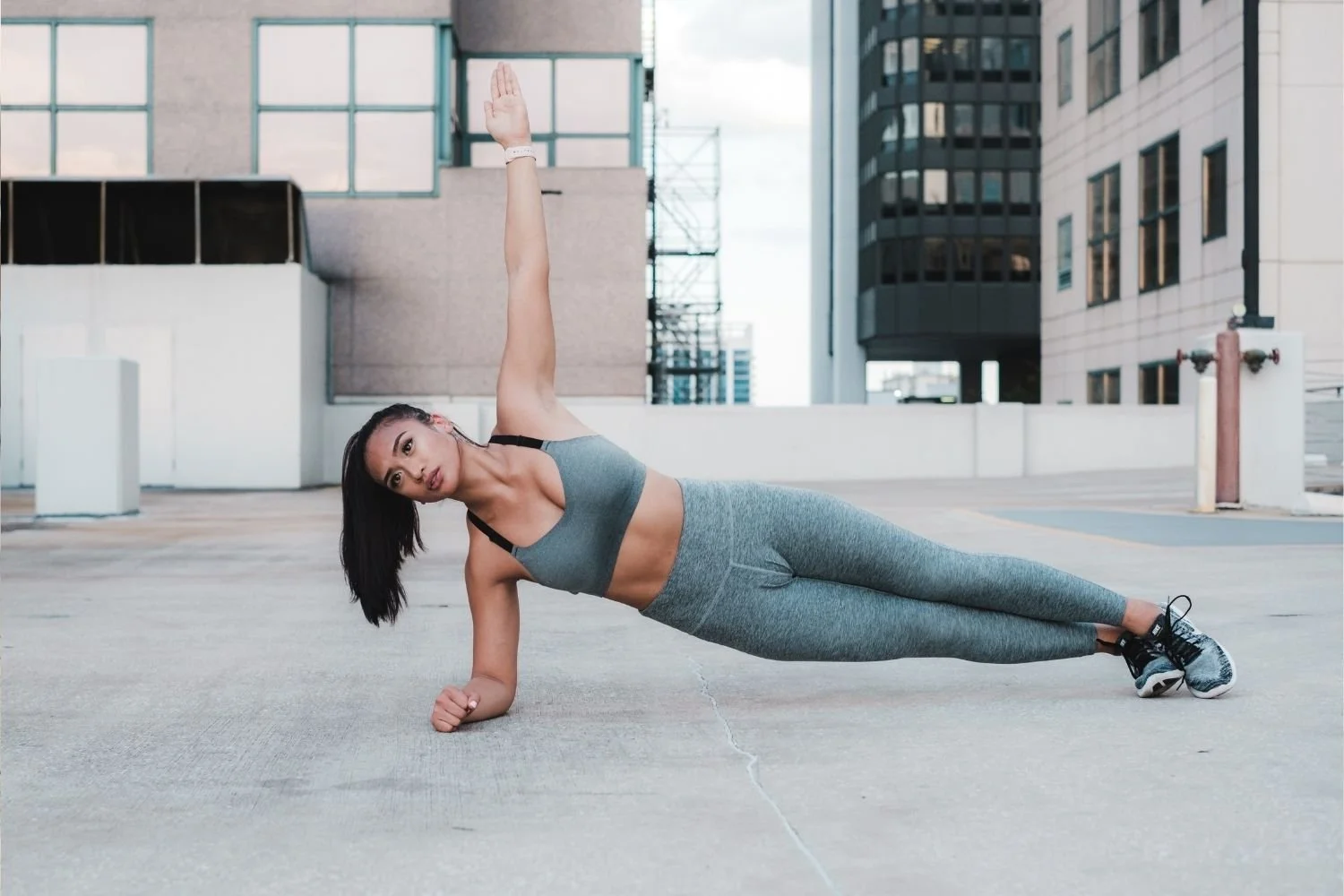
Planks (Front + Side). Planks train your core to resist movement rather than create it. They activate the transverse abdominis, improve posture, build deep core endurance, and teach proper bracing. Key tip: squeeze your glutes and brace your abs as if someone is about to poke your stomach. Passive planks don't deliver results — tension does.
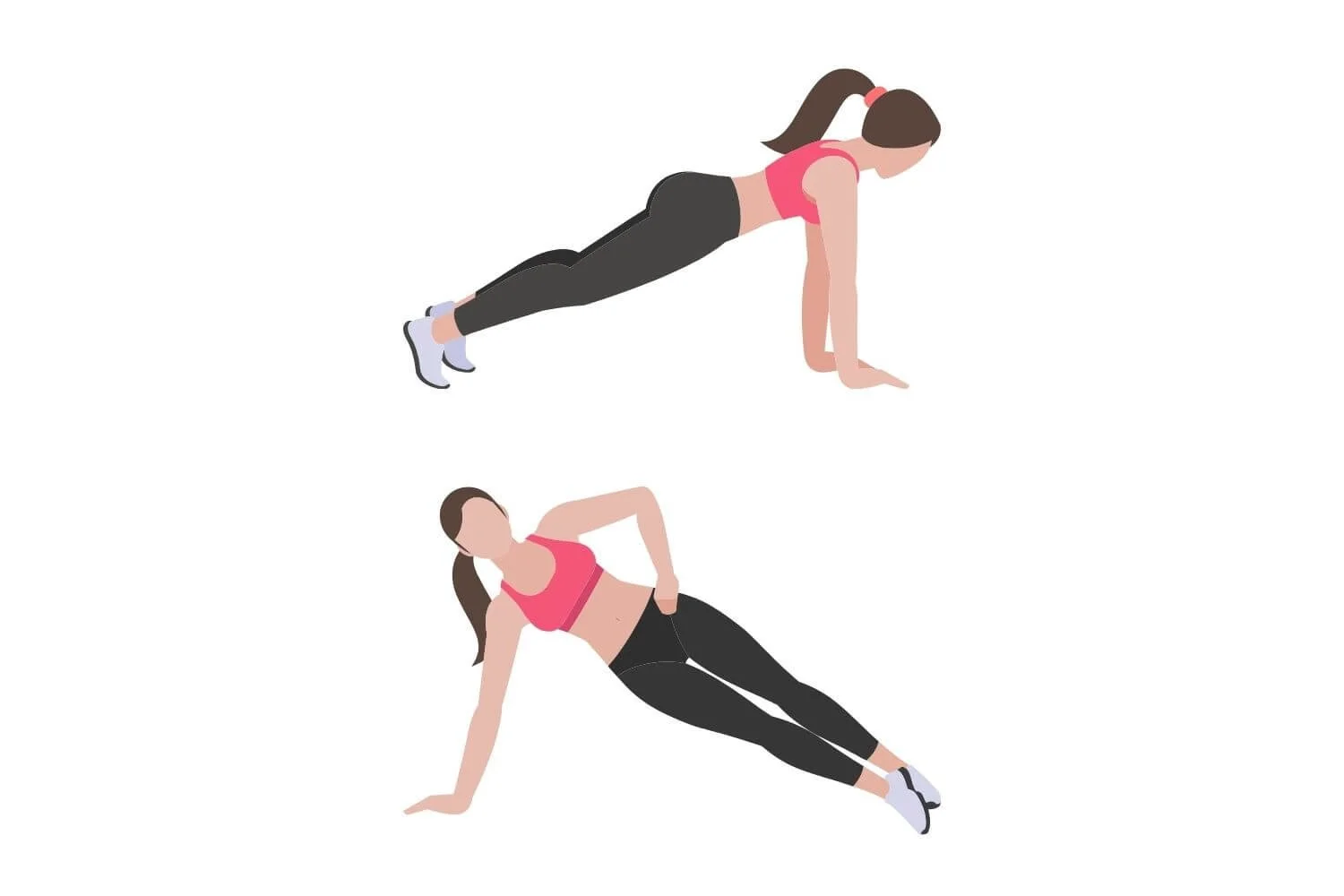
Forearm and side planks strengthen the deep core muscles that help tighten your midsection and improve posture — far more effectively than crunches alone.
Dead Bugs. Dead bugs train core stability while your limbs move. As your arms and legs extend, your lower back wants to arch — your deep core must prevent that. They improve lower abdominal control, pelvic stability, core coordination, and postural strength. If your stomach protrudes while standing, weak lower-core control may be a contributing factor.
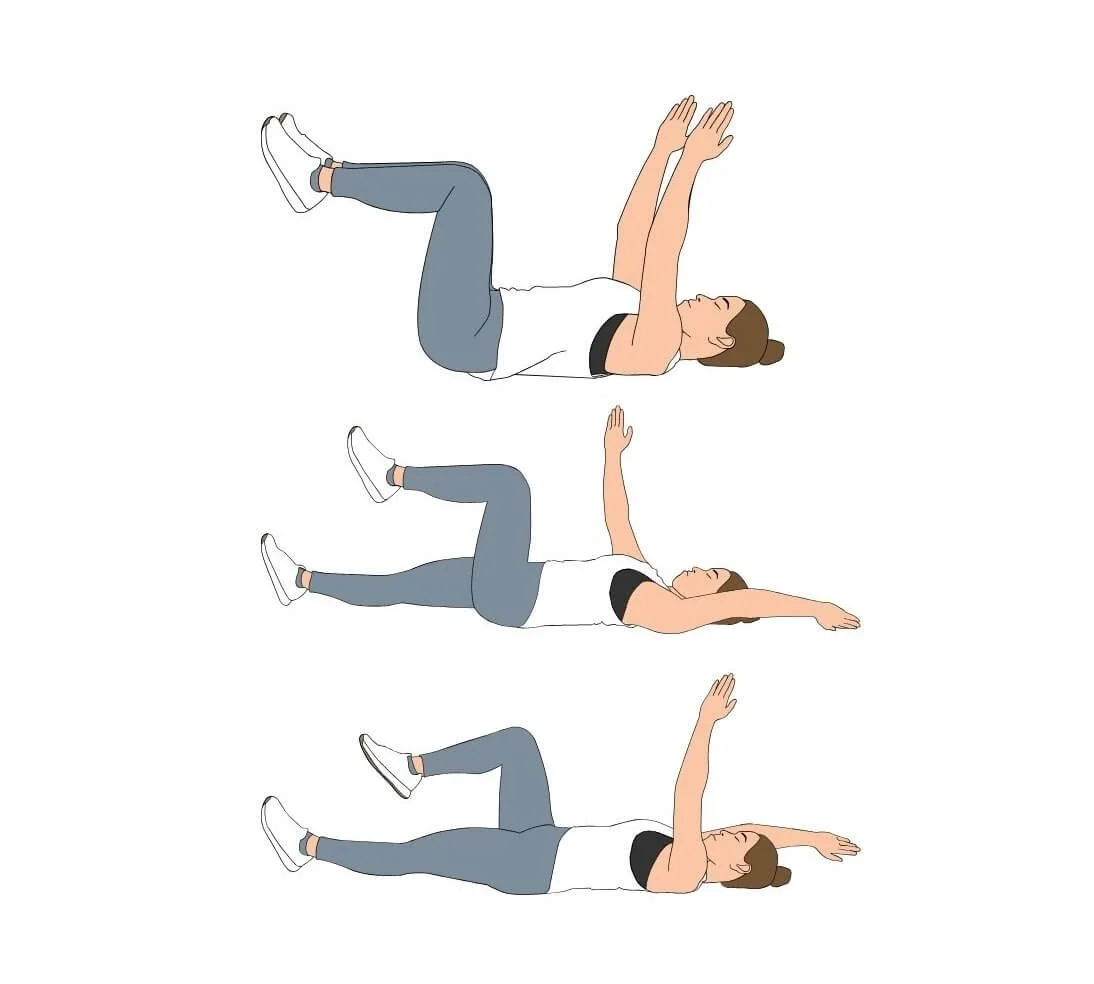
The dead bug trains your core to resist lower back arching as your arms and legs move — building deep abdominal control and better posture.
Glute Bridges. Glute bridges are critical, even though they don't look like ab exercises. Weak glutes can contribute to anterior pelvic tilt (hips tipping forward), which pushes your stomach outward. Glute bridges strengthen the glutes, improve pelvic alignment, reduce lower back strain, and improve midsection appearance. Sometimes what looks like "belly fat" is partly a posture issue.
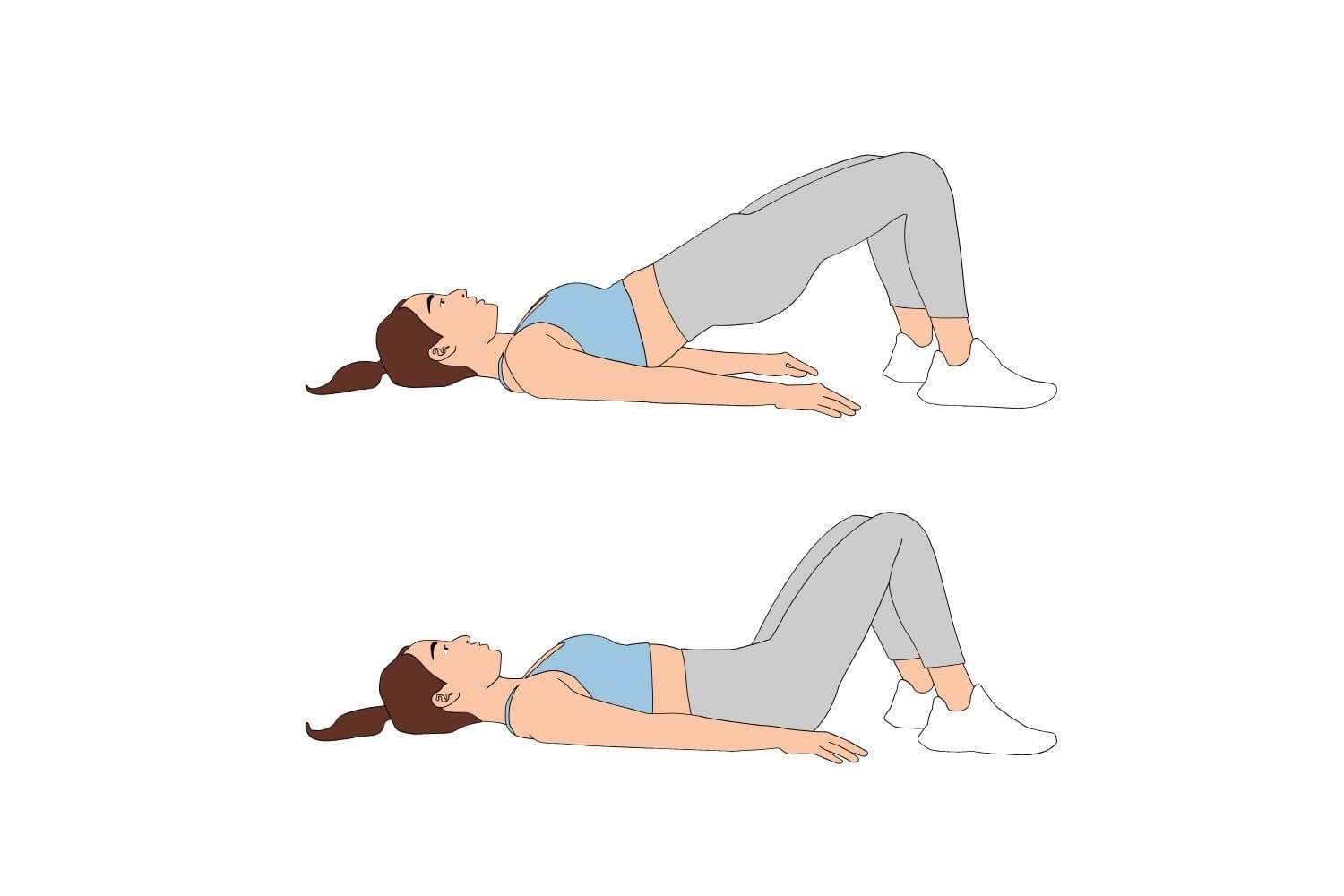
The glute bridge strengthens the glutes and improves pelvic alignment — helping reduce anterior pelvic tilt that can make the stomach appear to protrude.
Hanging Knee Raises. Hanging knee raises train your abs dynamically while suspended. They target lower abdominal fibers, require strong bracing, increase total core activation, and burn more energy than crunches. Because you're stabilizing your entire body against gravity, these recruit far more muscle than floor crunches.
Step 3: Lose Fat Gradually (Not Aggressively)
If belly softness includes body fat, you need a slight calorie deficit — not starvation, not detoxes.
What works:
Protein intake around 0.7–1 gram per pound of body weight
Whole foods most of the time
Strength training
8,000–10,000 steps daily
Adequate sleep
What doesn't:
"Belly fat burner" supplements
Detox teas
Crash dieting
Gradual fat loss preserves muscle and reduces the risk of worsening loose skin.
Step 4: Fix Daily Posture and Movement
If you sit most of the day, your hips tighten, your glutes weaken, and your pelvis tips forward. That alone can make your stomach appear larger — even if your actual body fat hasn't changed.
Daily habits that help:
Stand up every hour
Walk after meals
Practice bracing while standing
Strengthen glutes and upper back
Small corrections done consistently create visible changes over time.
Step 5: If It's Loose Skin — Be Realistic
If you've lost significant weight or experienced pregnancy-related stretching, loose skin takes time to improve — and timelines vary widely based on age, genetics, and how much weight was lost.
Factors that help:
Building muscle underneath
Staying hydrated
Losing fat slowly
Giving it patience — many people see meaningful improvement within 6–12 months, though results vary
Creams won't fix it. Spot exercises won't fix it. In severe cases, medical procedures are the only way to remove excess skin — but most people see noticeable improvement with muscle gain and recomposition alone.
Sample Weekly Plan
Day 1 – Lower Body Strength + Core
Day 2 – Walk + Core Stability
Day 3 – Upper Body Strength
Day 4 – Rest or Light Cardio
Day 5 – Full Body Strength + Hanging Knee Raises
Weekend – Active recovery (walking, mobility)
Consistency for 12–16 weeks will create visible changes in how your midsection looks.
The Bottom Line
Getting rid of a loose belly is not about doing more crunches. It's about:
Building muscle
Strengthening your deep core
Improving posture
Losing fat gradually
Moving daily
Staying consistent
When you train your body the way it's designed to function, your stomach tightens naturally.
There are no shortcuts — but there is a clear path. Follow it patiently, and the results will come.
Build Strength That Lasts
Real results come from consistent training and better fundamentals.
Keep learning. Keep building.